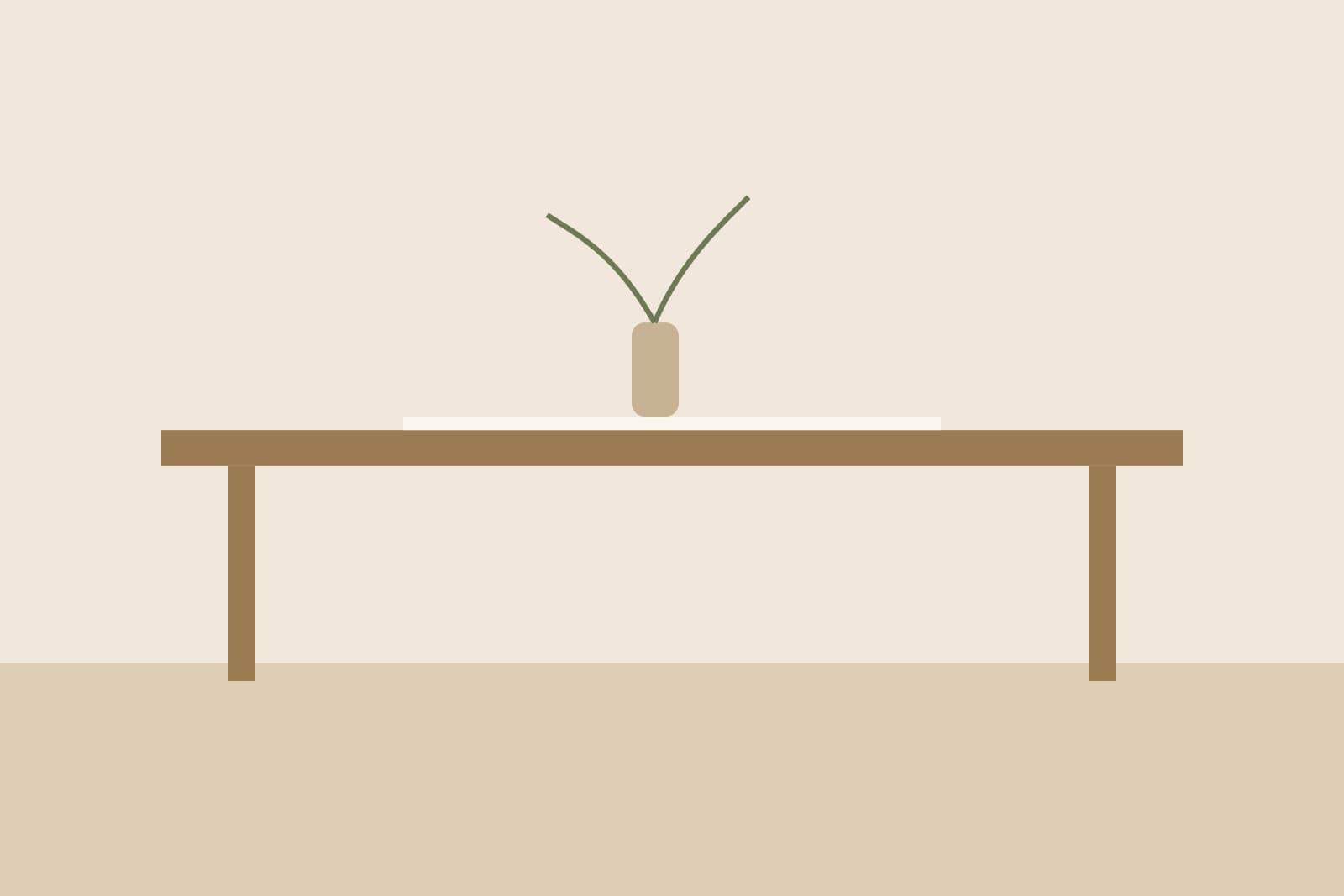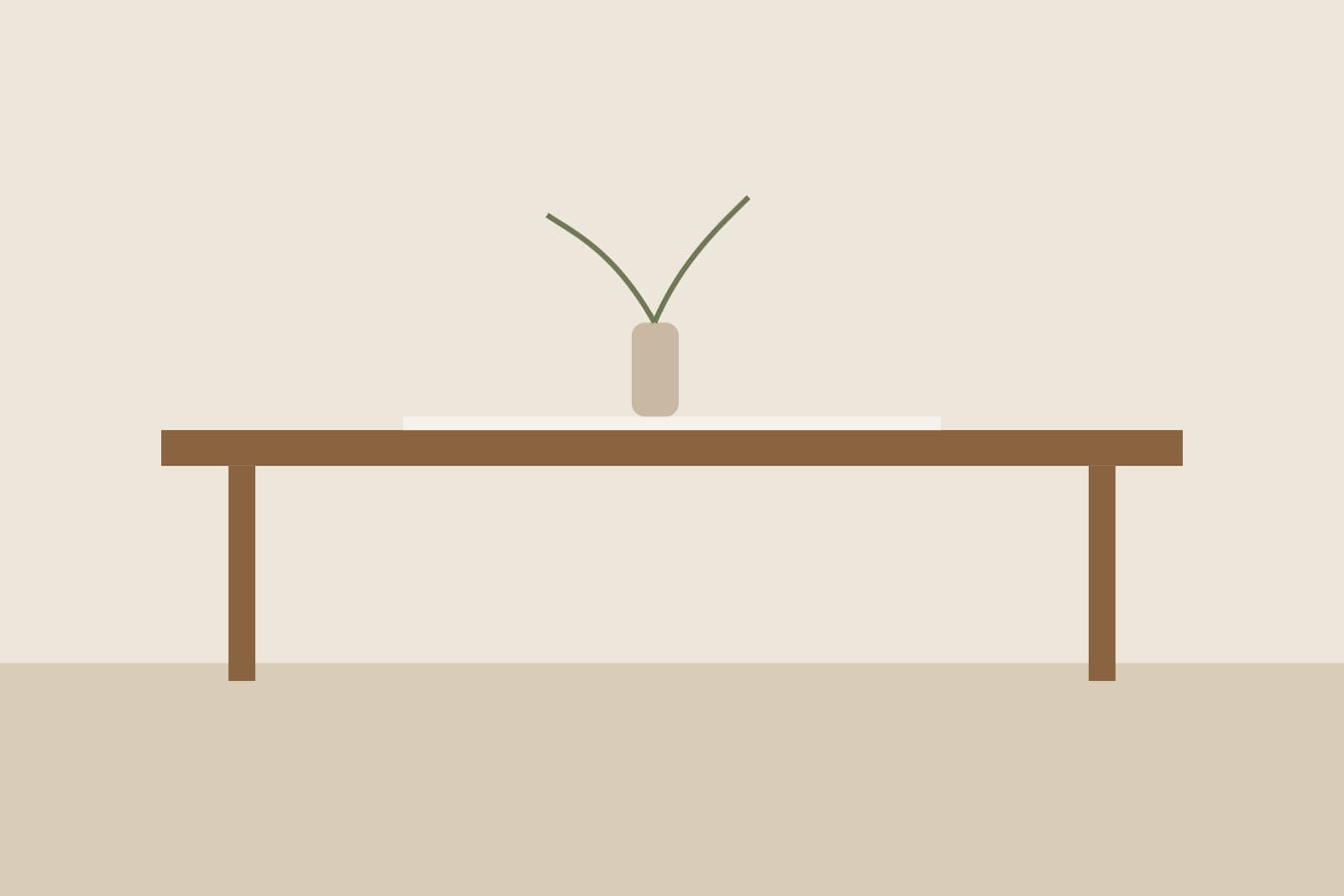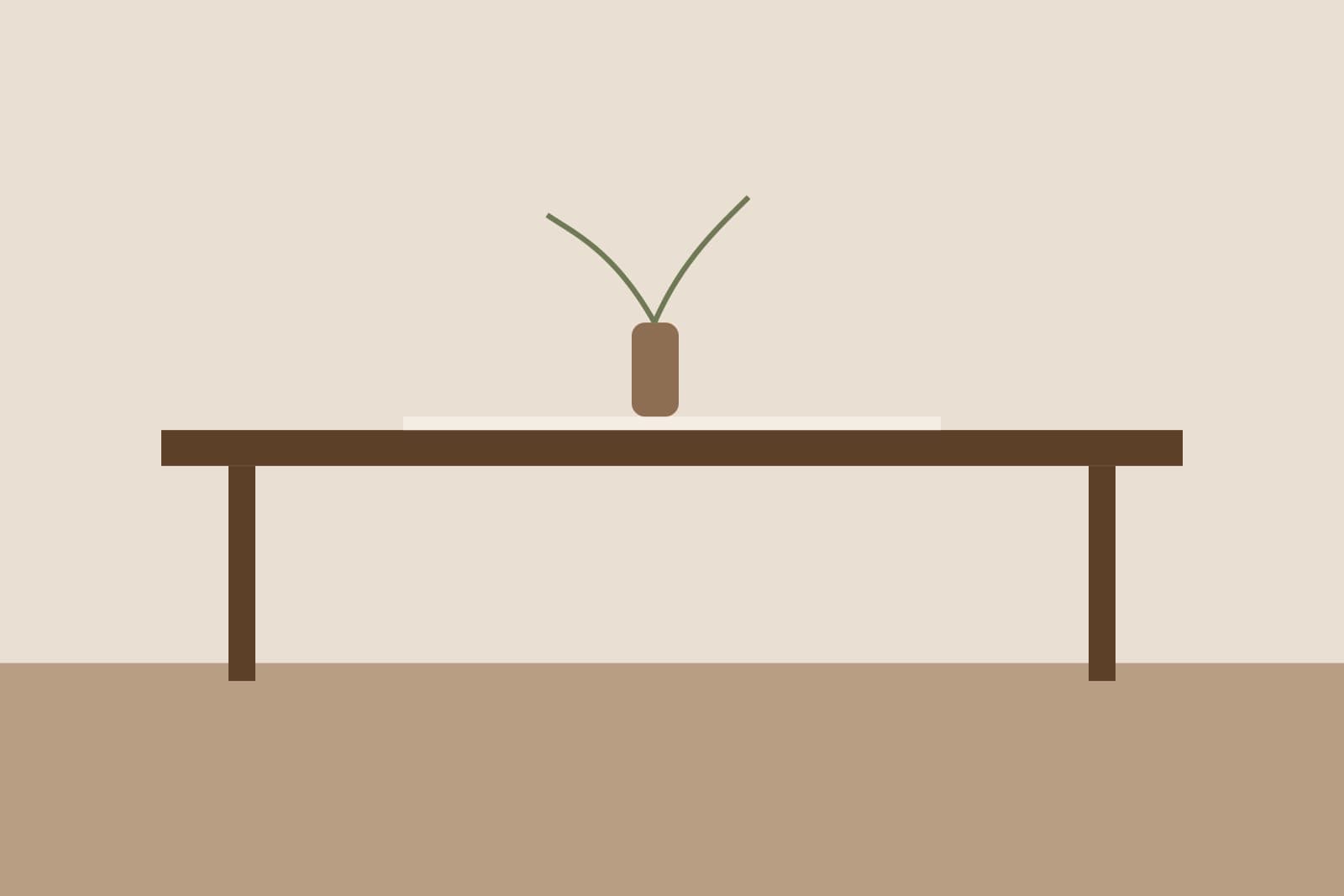
Most things in a home look their best on the day they arrive. Natural materials work the other way round. A linen sheet is stiff for its first few washes. A new oak table is pale and a little flat. Give them a year of ordinary life and both start to look like they belong to you.
What actually changes#
Linen loosens#
Linen is spun from flax fibres, which are long and slightly waxy. Each wash breaks down a little of the natural stiffness between them. The weave relaxes, the surface goes from crisp to soft, and the fabric drapes instead of standing up. Nothing is wearing out; the fibres are just settling.
Oak deepens#
Fresh oak is pale because its surface hasn't met much light or air yet. Over months, UV light and oxygen react with the tannins in the wood and it warms to a honey colour. Oiled oak also picks up a soft sheen from hands and sleeves. This is the patina people pay extra for in old furniture.
Wool and leather take your shape#
A wool cushion slowly moulds to the way you sit. Leather straps and handles soften where they're held. These materials record use, and that record is part of the appeal.
Living with marks#
The hardest part of owning natural materials is the first scratch. After that it gets easier. A few small habits help the whole surface age evenly, so single marks blend in:
- Use the whole table, not just one end. Wear spreads out and looks intentional.
- Turn cushions and rotate rugs every season.
- Wash linen often rather than rarely. Regular washing softens it evenly.
- Re-oil wood once or twice a year, before it looks dry rather than after.
Why we build with them#
We choose linen and oak because they're honest about their age. They don't pretend to stay new, and they don't fall apart when they stop being new. A piece that looks better in ten years is a piece you won't replace, and that's the calmest kind of furniture there is.
If you want to start caring for what you already have, our guide to oiling an oak table is a good first step.